Pull depreciation forward. Speed up your property's deductions in year one.
Cost segregation is an engineering study that reclassifies part of a property's basis into shorter depreciation schedules, letting a Texas rental or commercial property owner take most of that deduction in year one instead of over 27.5 or 39 years.
If you own a rental, a short-term rental, or commercial property, you're depreciating it over 27.5 or 39 years by default. Cost segregation reclassifies the components of the building (carpet, fixtures, parking, landscaping, plumbing) into 5, 7, and 15-year buckets. Year-one deduction can jump. The size depends on price, land share and property type; we run your numbers first.
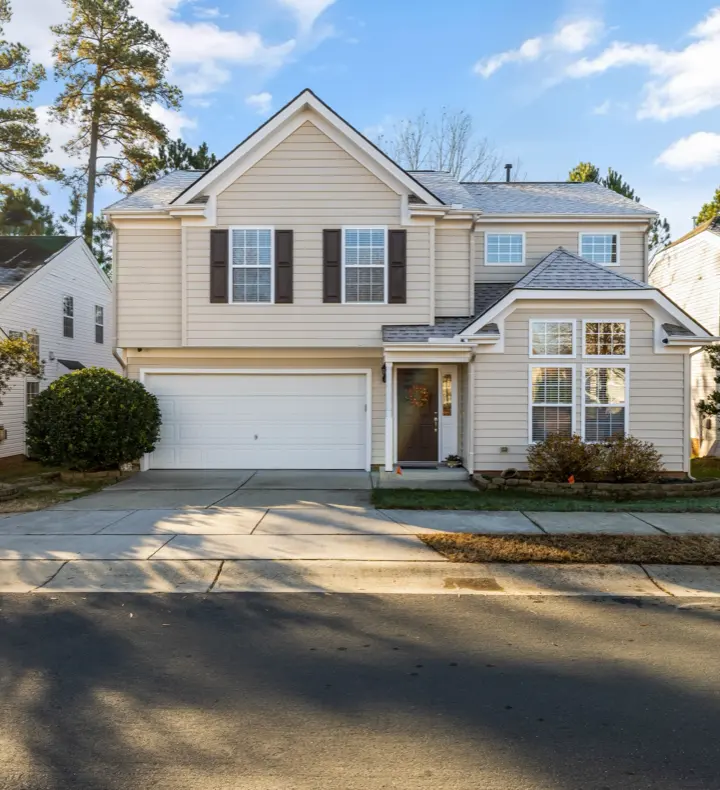
You own property. You haven't run a cost seg study yet.
- One or more rental properties bought in the last 1–10 years
- Short-term rental / Airbnb where the STR loophole is on the table
- Commercial property owner with depreciation running on a 39-year schedule
- Real estate professional status qualifier looking to offset W-2 income
- Fix-and-flip or BRRRR operator with multiple holds and capex history
- Recent property purchase ($500K+ basis) ready to accelerate depreciation in year one
- Inherited property with a stepped-up basis you haven't optimized yet
- 1031 exchange completed where the new property's depreciation should be reset
The mechanics. In plain English.
Default depreciation: residential rental property over 27.5 years, commercial property over 39 years. That means if you bought a $500K rental, the IRS lets you deduct about $18K per year in depreciation. Slow. Boring. Below-market.
Cost segregation looks at the building as a collection of components, not one block. Some of those components are personal property (5-year life (carpet, fixtures, appliances). Some are land improvements (15-year life) landscaping, parking, fencing). Some really are structure (27.5 or 39).
An engineering-grade study reclassifies a chunk of the basis into the shorter buckets, and bonus depreciation rules let you deduct most of that in year one. The same $500K property might generate $80K–$150K of front-loaded depreciation instead of $18K.
If you have real estate professional status or you own a short-term rental with material participation, those paper losses offset your W-2 income directly, if you meet the real estate professional tests (more than 750 hours AND more than half of all personal service time in real property trades, plus material participation in the rental) or the short-term rental tests. Otherwise they are passive and carry forward. A yearly cap also applies. That's where the W-2-tax-savings stories come from, with the caveats attached.
$500K rental. What changes when we run a cost seg.
Assumes the property was acquired after January 19, 2025 and qualifies for 100% bonus depreciation. Older purchases use a lower rate.
| Bucket | Default schedule | Allocated basis | Year-1 deduction |
|---|---|---|---|
| Building structure (27.5-yr) | Straight-line | $340,000 | $12,364 |
| Land improvements (15-yr) | 100% bonus depreciation | $60,000 | $60,000 |
| Personal property (5-yr) | 100% bonus depreciation | $50,000 | $50,000 |
| Land (not depreciable) | - | $50,000 | $0 |
| Year-1 total deduction with cost seg study | $122,364 | ||
| vs. default straight-line on the $450,000 building (land excluded) over 27.5 years | $16,364 | ||
Numbers are illustrative: actual studies vary by property condition, geography, basis allocation and the bonus depreciation rate for your acquisition date. For property you bought after January 19, 2025, bonus depreciation is 100%; for older property, the rate depends on the year you bought it. Bring us the property details on the Discovery call and we'll model your specific case before any work begins.
Eight deliverables per study. Audit-defensible from day one.
Site inspection (where applicable)
Engineer walks the property in person or via documented virtual inspection.
Component-level basis allocation
Every depreciable component identified, classified by IRS life category, and assigned its share of basis.
Bonus depreciation schedule
Year-by-year depreciation schedule accounting for the current bonus-depreciation phase-out.
Written engineering report
50–100 page report documenting methodology, citations, and component classifications. IRS-ready.
Tax preparer integration
If we prep your return, the cost seg results flow straight into your Schedule E / 8825 / 4562 lines.
STR / REPS positioning memo
If the loss is meant to offset W-2 income, we document material participation and the strategy that supports it.
Look-back study for prior years
Section 481(a) catch-up depreciation if the property was placed in service in prior years.
Audit-defense documentation chain
Our studies follow the IRS cost segregation audit guide, so each choice has support if the IRS asks.
Partner-supported on $1M+ basis properties.
For smaller properties ($300K–$1M basis), we run the study in-house using our engineering methodology. For larger or commercial properties ($1M+ basis), we coordinate with vetted engineering-firm partners whose work has stood up to IRS audit dozens of times.
Why the split: smaller residential studies are well-suited to our in-house methodology and pricing model. Larger commercial work warrants the on-site walkthrough and additional engineering depth that specialized partners provide. Same audit-defensible output, scoped to the property's actual complexity.
Joel Salas leads the tax side. MCS runs the study.
Joel Salas
Joel owns the tax positions behind every cost seg study, so the depreciation schedule flows correctly into your return and holds up if the IRS asks.
My Cost Segregation
We own My Cost Segregation, and it runs the engineering study itself as its own brand. Larger studies route through vetted engineering-firm partners the same way described above.
What real estate owners actually ask.
Is cost seg worth it for a $250K rental?
Often no. The study fee starts to make sense around $300K–$500K basis when you can use the losses. Below that, the math gets tight. We tell you on the Discovery call. If your property is too small for cost seg to pay off, the right move is usually accountable plan + bookkeeping + entity optimization, not a study.
What's the STR loophole and do I qualify?
If the average guest stay is 7 days or less, the rental is not treated as a rental activity under the passive rules. Your loss is non-passive only if you also materially participate, typically by meeting one of seven tests including over 100 hours/year and more than anyone else (not less than any other individual, including cleaners, managers and co-owners). The Discovery call assesses whether your STR setup actually qualifies. Most do, some don't.
Can I run cost seg on a property I bought five years ago?
Yes. We catch up past depreciation on your next return using Form 3115 (a change in accounting method); you do not amend old returns. Older purchases get the bonus rate from the year you bought them. This is one of the better moves for owners who held property for years without ever running a study.
What about depreciation recapture when I sell?
Cost seg makes more of the gain ordinary income when you sell (straight-line building depreciation is unrecaptured section 1250 gain, taxed at up to 25%). A 1031 exchange can put that off, but only if the new property is set up right. If you're selling outright, we model the recapture cost against the front-loaded savings as part of the study.
How long does a study take?
In-house studies for smaller residential properties: 3–4 weeks. Partner-supported commercial studies: 6–10 weeks. Look-back studies on properties placed in service in prior years can run a bit longer because we have to reconstruct the prior depreciation history.
One 20-minute call. We model your specific property.
Bring the property details (basis, year acquired, type, location) and we'll model the year-one deduction range and quote the study before any work starts. If the math doesn't justify it, we'll say so.
Book a free call →